
Making your own natural foundation can transform your beauty routine by giving you full control over the ingredients, texture, and shade you put on your skin. Many people assume store-bought makeup is the only safe or effective option, but simple, well-handled DIY blends can work for some skin types when made thoughtfully. The real shift isn’t about rejecting commercial products — it’s about understanding what you use every day and choosing what feels right for your skin and values.
The Quiet Question That Starts It All
It usually begins with a small thought.
You’re standing in front of the mirror, foundation in hand, and you wonder: Do I actually know what I’m putting on my skin every day?
For many people, makeup is a confidence ritual. It smooths, evens, enhances. But at some point, curiosity creeps in. Why does this feel heavy by noon? Why does my skin react sometimes? Why does the ingredient list read like a science experiment?
That’s often the moment DIY beauty enters the conversation.
Not as a rebellion against store-bought makeup. Not as a claim that everything commercial is harmful. But as a desire to understand, simplify, and personalize.
And that shift — toward awareness — can quietly transform your beauty routine.
Let’s Talk About Ingredients — Without the Fear
Commercial foundations are formulated for stability, performance, and long wear. They contain preservatives (to prevent bacteria growth), emulsifiers (to blend oil and water), and pigments like iron oxides for consistent color.
These ingredients are regulated and considered safe for the general public. In fact, preservatives are essential in water-based cosmetics because they prevent contamination, which can be more dangerous than the preservative itself.
However, some individuals with sensitive or reactive skin may prefer fewer ingredients or fragrance-free formulas. Dermatologists often recommend simplifying skincare routines when someone experiences irritation.
The key difference with DIY products isn’t that commercial ones are “toxic.” It’s that homemade versions give you full transparency. You know exactly what’s in the jar — because you put it there.
That sense of control can feel reassuring.

The Appeal of Simplicity
There’s something grounding about measuring out ingredients and blending your own formula.
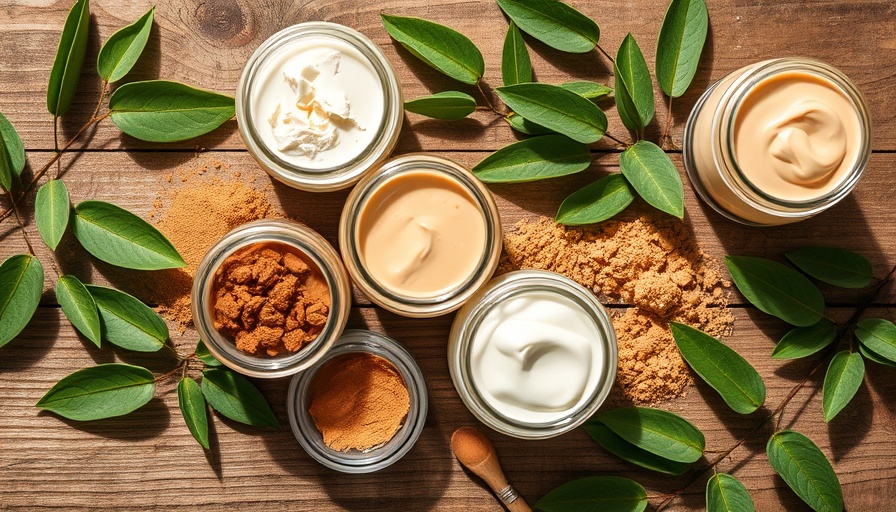
Arrowroot powder. Cocoa powder. Bentonite clay.
No mystery compounds. No complicated names. Just simple materials with familiar purposes.
Skin specialists often emphasize that reducing unnecessary additives can help certain skin types feel calmer. Simplifying doesn’t mean commercial makeup is unsafe — it simply means some people thrive with fewer variables.
And DIY allows you to test that for yourself.
Powder Foundations: A Gentle Starting Point
If you’re curious about making your own foundation, powder is the safest and simplest place to begin.
A basic blend typically includes:
Arrowroot powder for a soft base that helps absorb excess oil
Cocoa powder for natural tint
Bentonite clay to help manage shine
It’s important to clarify something here: bentonite clay does not “detox” your skin. The body detoxifies through the liver and kidneys. What clay can do is absorb surface oil and help reduce shine.
That oil-absorbing property makes it useful for those who prefer a matte finish.
Powder foundations also carry lower microbial risk than liquid products because bacteria require water to grow. As long as the powder is stored in a dry, airtight container and applied with clean brushes, it can remain stable for quite some time.
Still, inhaling loose powders should be avoided, and cosmetic-grade clay is recommended for safety.
Liquid DIY Foundations: What to Know First
Liquid foundations are slightly more complex.
A homemade liquid version usually involves blending a dry powder base with plant-based oils like jojoba, grapeseed, or rosehip oil. These oils are commonly used in skincare and can be chosen based on your skin type.
However, this is where safety awareness matters most.
Even though oil-based products are lower risk than water-based formulas, they still have a shorter shelf life than commercial foundations, which contain preservative systems designed to prevent contamination.
If you choose to make a liquid foundation:
Use clean, sanitized tools
Store it in an airtight container
Avoid dipping fingers directly into the jar
Discard at the first sign of odor or texture change
Make small batches
DIY liquid formulas are best treated as short-term products rather than long-term staples.
That doesn’t make them unsafe — it just means they require mindfulness.

Shade Matching Without the Pressure
One of the most practical benefits of DIY foundation is flexibility.
Store lighting can distort color. Seasons change your tone. Hormones shift pigmentation. It can feel frustrating trying to find the “perfect” match in a bottle.
With a homemade blend, you adjust gradually. A little more cocoa powder. A touch more arrowroot. Slightly warmer or lighter depending on the month.
Instead of committing to one shade year-round, you adapt.
That flexibility is empowering — especially for people who feel stuck between commercial shade categories.
What About Sustainability?
There’s no question that DIY beauty can reduce packaging waste.
Fewer plastic bottles. Fewer pump tops. Less shipping.
But it’s also important to acknowledge that ingredients like cocoa powder and bentonite clay still have environmental footprints. No beauty product — homemade or commercial — is completely impact-free.
The difference lies in scale and frequency. Making small batches at home may reduce waste over time, especially if you reuse containers and buy ingredients in bulk.
Sustainability is less about perfection and more about incremental change.
Is DIY Foundation Right for Everyone?
Not necessarily.
If you have:
Active acne
Rosacea
Highly reactive skin
Allergies to natural ingredients
Or compromised skin barriers
You may want to consult a dermatologist before experimenting.
“Natural” does not automatically mean “non-irritating.” Cinnamon, essential oils, and even certain plant powders can cause reactions for some people.
Patch testing remains one of the most important steps. Apply a small amount to the inside of your arm and wait 24 hours before applying to your face.
Listening to your skin matters more than following a trend.

What This Movement Is Really About
DIY foundation isn’t about rejecting commercial cosmetics. Many store-bought products are well-tested, effective, and safe.
It’s about curiosity.
It’s about realizing that beauty doesn’t have to feel mysterious.
It’s about learning enough to make informed decisions — whether that means choosing a minimalist store brand or mixing your own blend.
When you understand ingredients, you shop differently. You ask better questions. You become less influenced by marketing claims and more guided by your own experience.
That’s the quiet power behind DIY beauty.
The Emotional Shift
Perhaps the most surprising change isn’t in your skin — it’s in your mindset.
When you create your own foundation, even once, something shifts. You realize makeup isn’t something that happens to you. It’s something you participate in.
You’re not dependent on a label to tell you what works. You experiment. You adjust. You observe.
And sometimes, that leads to wearing less — not because you feel pressured to, but because you feel comfortable.
A Balanced Perspective Moving Forward
If you’re considering trying DIY foundation, here’s the balanced takeaway:
Commercial foundations are regulated and safe for most people.
Preservatives prevent contamination and are important in water-based products.
DIY powder formulas are lower risk than liquid ones.
Shelf life matters.
Patch testing is essential.
Natural ingredients can still cause reactions.
DIY beauty isn’t inherently better — it’s simply another option.
For some, it becomes a long-term routine. For others, it’s a short experiment that deepens appreciation for thoughtfully formulated products.
Either way, the real win is awareness.
Because when you understand what’s touching your skin every day, your beauty routine becomes less about coverage — and more about choice.
And that’s a glow that doesn’t wash off.
If protecting the planet is part of how you live well, explore Eco Living — and discover more stories about mindful living on Sacramento Living Well.
---
Created by the Sacramento Living Well Editorial Team — part of DSA Digital Media, highlighting responsible choices and everyday sustainability.


Write A Comment