
Discovering Off-Grid Living in Vermont: A Personal Journey
On a quiet hillside in rural Vermont, where snow gathers softly in winter and birdsong replaces the hum of traffic in spring, Charles and Jill wake each morning without utility bills, without streetlights glowing outside their windows, and without the steady background noise of a power grid.
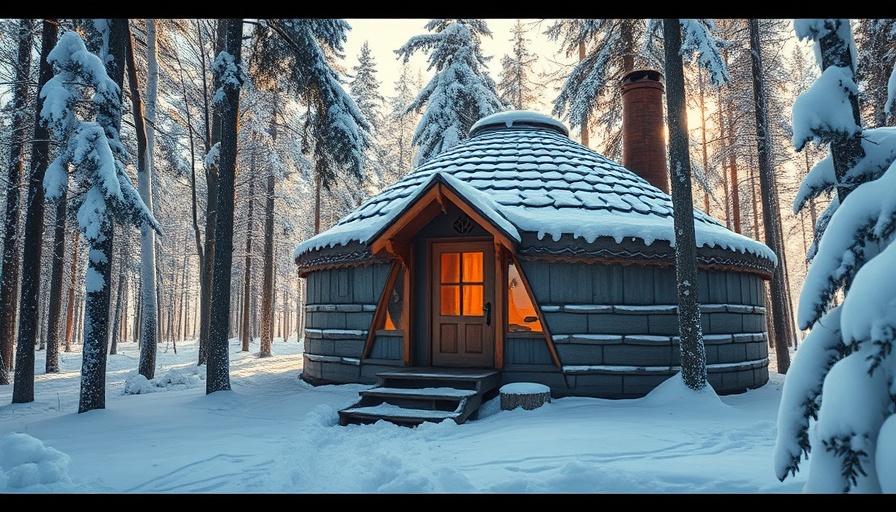
Their home — a circular yurt tucked deep into the woods — is modest in size at just 700 square feet, yet expansive in intention.
Every solar panel mounted on the hillside, every gallon of rainwater stored underground, and every board carefully leveled into the deck reflects a deliberate choice about how they want to live.
For many people, off-grid living remains something they watch from afar — a late-night YouTube curiosity or a romantic “what if” conversation.
For Charles and Jill, it became a structured, long-term plan shaped by years of saving, learning, and steady preparation.
What they have built is not simply a structure in the forest; it is a carefully engineered system designed to support independence, awareness, and long-term resilience. And after years of effort, it works.
In 'Couple Living Off-Grid in Their DREAM Yurt Home in the Forest,' Charles and Jill explore their journey into off-grid living, providing engaging insights that inspired our analysis.
A Plan That Began in the City
Their journey didn’t start in Vermont. It began in Dallas, where both were working demanding schedules while quietly saving for a future that looked very different from their present. Eight years ago, during a trip north, they purchased 20 acres of Vermont hillside.
Later, they added another 10 acres, expanding both their vision and their timeline. Originally, they planned a five-year transition. Buying more land pushed that goal back, but it also deepened their commitment to building something sustainable rather than rushed.
Charles had always envisioned returning to country life. Growing up rural, he saw city living as a temporary means to an end — a place to earn and prepare.
Jill’s motivation centered more on connection than escape. She wanted to hear birds instead of traffic, to know her backyard in every season, and to feel rooted rather than transient.
When they finally relocated, they began modestly, living in an RV while installing the most essential systems: solar power and water collection.
From the beginning, they committed to being fully off-grid. No outside electricity. No municipal water. Everything would originate on their own land.
Why They Chose a Yurt Instead of a Traditional Home
Rather than build a conventional rectangular house, Charles and Jill selected a 30-foot Pacific Yurt — a modern version of a centuries-old circular dwelling.
The interior provides roughly 700 square feet of largely open living space, with only the bathroom enclosed to manage moisture and plumbing. The circular design eliminates unused corners and creates a sense of flow that makes the space feel larger than its footprint suggests.
Light pours through the central dome during the day, reducing reliance on artificial lighting and reinforcing their connection to natural rhythms.
While the yurt shell can be assembled relatively quickly, transforming it into a year-round home capable of handling Vermont winters required far more work. The yurt kit itself typically falls within the $30,000–$40,000 range depending on options and materials.
However, once infrastructure was added — including the foundation system, insulated flooring, solar equipment, battery storage, rainwater cisterns, septic installation, decking, plumbing, interior finishes, and heating systems — their total investment reached approximately $100,000. For a 700-square-foot dwelling, that figure may surprise some readers, but building independent systems from scratch is rarely inexpensive.
What it offers instead is long-term stability and reduced recurring costs.

Engineering Around a Hillside Instead of Fighting It
Their property is not flat. In fact, very little of it is level. Rather than force the landscape to comply, Charles designed a pier-and-beam foundation that adapts to the slope.
On one end, the deck sits about a foot above ground; on the other, it rises high enough to walk underneath. This elevation protects the structure from moisture while allowing airflow beneath the floor.
The floor itself is constructed with insulated structural panels designed to withstand cold Vermont winters. Beneath the yurt, Charles built an enclosed, insulated compartment to protect plumbing from freezing.
Even the rainwater cisterns — three underground tanks totaling about 4,500 gallons — were buried by hand over several months because heavy equipment couldn’t safely maneuver the terrain. What might appear simple from the outside required extraordinary patience behind the scenes.
This wasn’t rapid construction driven by deadlines. It was slow, careful building shaped by terrain, weather, and learning curves.
Living on Solar Means Living With Awareness
A 6-kilowatt solar array mounted on the hillside powers the entire property. Twenty panels feed electricity into batteries housed in a dedicated solar shed, where inverters convert stored energy into usable power.
They are also setting up a backup generator to recharge batteries during extended cloudy stretches, which can happen in northern climates.
Living on solar power changes behavior in subtle but meaningful ways. Energy is no longer invisible. When you rely on stored sunlight, you begin thinking differently about consumption.
Appliances are used thoughtfully. Weather patterns matter. Cloudy weeks require awareness. The system doesn’t limit comfort — they run a mini-split heat pump and modern appliances — but it does encourage intentionality. Power becomes tangible rather than assumed.
Choosing Rainwater Over a Well
In Vermont, septic approval is required before residency, and Charles and Jill wisely completed that installation early. While their permit included the option to drill a well, they chose instead to rely on rainwater collection.
Gutters around the yurt feed into underground cisterns, and a pump system delivers water into the home for daily use.
With 4,500 gallons of storage, they estimate roughly four months of water capacity when the tanks are full. In their region, that has proven sufficient and resilient.
Interestingly, some nearby wells have experienced reduced output during drought periods. In their case, rainwater collection has been not just sustainable but practical.
Every element of the system is buried and insulated to prevent freezing, which required significant labor but ensures reliability through harsh winters.
Staying Warm — and Cool — in a Circular Home
Heating the yurt centers around a rocket mass heater, a highly efficient wood-burning system designed to store heat in thermal mass materials and release it slowly over time.
Unlike a traditional wood stove that produces rapid heat spikes, this system distributes warmth more evenly throughout the space.
They have also integrated radiant floor heating tied to a propane on-demand water heater as a secondary option, along with glycol-based fluid in the lines to prevent freezing if temperatures drop while they’re away.
In summer, the central dome that floods the interior with daylight creates a greenhouse effect. To maintain comfort, they installed a mini-split heat pump capable of cooling as well as heating.
Off-grid living, in their case, does not mean rejecting modern technology. It means choosing tools deliberately and ensuring their systems can support them.

What Small, Intentional Living Teaches
Natural building advocate Lloyd Kahn has long documented alternative housing and emphasized that thoughtfully designed small homes often feel more livable than oversized houses built without purpose. When space is limited, every square foot must earn its place.
Inside this yurt, storage is built into walls, cabinetry is handcrafted, and layout decisions maximize efficiency. The result feels cohesive rather than cramped.
Permaculture co-founder Bill Mollison frequently taught that sustainable design begins with observing the land before making changes. Charles and Jill followed that principle closely.
They studied sunlight angles, drainage patterns, and seasonal weather shifts before finalizing placement and systems. That patience likely saved them from costly redesigns and reinforced a mindset of cooperation with nature rather than domination of it.
The Real Return on Investment
While the total build approached $100,000, the long-term financial shift has been transformative. Charles and Jill are debt-free. Their recurring expenses consist mainly of groceries, fuel, propane, insurance, and property taxes. Without a mortgage or monthly utility bills, the pressure to generate high income decreases significantly.
That reduction in financial stress reshaped their lives. Charles has focused on building and maintaining the property full-time. Jill has chosen seasonal and part-time work she enjoys, rather than pursuing income solely out of necessity. For them, the greatest return on investment isn’t square footage — it’s flexibility.

The Unexpected Adjustment: Rebuilding Community
One aspect they did not fully anticipate was the challenge of building local relationships in a rural area where they knew no one. Online documentation of their journey has connected them to a broader audience, but in-person community takes time to develop.
Off-grid living reduces dependence on infrastructure, but it does not eliminate the human need for connection.
Learning how to plug into a new local network has required patience and intention — much like every other part of their journey.
Looking Ahead on the Hillside
The yurt was never necessarily the final structure. They envision planting fruit and nut trees, expanding garden areas, and continuing to refine their landscape. Long-term, they may explore building a passive solar home higher on the property if sustainable income allows.
For now, though, the yurt feels deeply like home — not temporary, not experimental, but lived-in and grounded.
More Than a Structure
Charles and Jill’s story is not about escape. It is about alignment. They traded convenience for awareness, noise for quiet, and recurring bills for long-term systems. Their lifestyle requires adaptability and resilience, but it also offers a clarity many people crave.
Off-grid living isn’t a universal solution. It demands labor, learning, and patience. But their hillside yurt stands as proof that independence is not theoretical. It is built board by board, panel by panel, decision by decision.
And sometimes, 700 square feet is more than enough.
Explore practical ways to live more sustainably and reduce your environmental footprint through Eco Living, or discover more wellness, lifestyle, and community stories on Sacramento Living Well.
---
Authored by the Sacramento Living Well Editorial Team — a publication of DSA Digital Media, dedicated to highlighting wellness, local living, and inspiring community stories throughout Greater Sacramento.


Write A Comment