
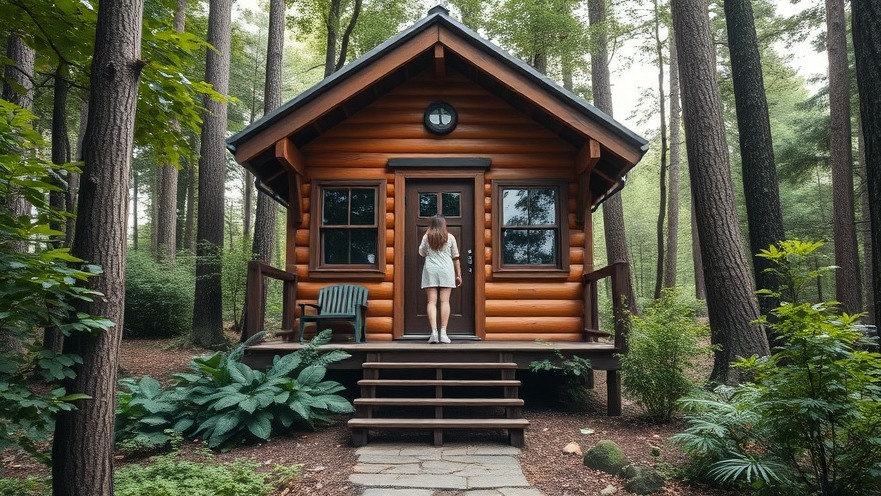
The Freedom of 413 Square Feet: How One Woman Built a Life That Feels Bigger Than Her Home
There’s a moment late at night when Amber climbs the stairs to her loft bedroom. The forest outside is quiet. Rain taps softly against the metal roof. She slips into bed beneath a skylight and looks up at the dark sky framed in glass.
“It’s the most cozy, safe little nest.”
If you’ve ever wondered whether living small might feel restrictive or cramped, her story may surprise you. Inside just 413 square feet, Amber has built a life that feels calm, intentional, and deeply aligned with what matters most to her.
She’s lived in her tiny home for four years. And for her, going small didn’t shrink her world — it simplified it.
In 'Woman Living in a Perfect Tiny House with BEAUTIFUL Interior Design – Cost & Full Tour', the discussion dives into Amber's unique tiny home and its sustainable features, exploring key insights that sparked deeper analysis on our end.
When Less Space Creates More Freedom
Amber describes herself as a minimalist — not in a trendy, aesthetic way, but in a practical, values-based way. She values simplicity. She values clarity. Above all, she values freedom.
Her tiny home stretches 34 feet long and 8½ feet wide. Built by Mint Tiny Homes in British Columbia, it includes two loft bedrooms, a full kitchen, a surprisingly large bathroom, and an office space where she runs her online practice as a nutritionist, herbalist, and personal trainer.
She downsized from a loft-style apartment, yet she rarely feels short on space. That’s because thoughtful design changes everything.
High ceilings draw the eye upward. Large windows bring in natural light. Open shelving in the kitchen prevents the boxed-in feeling that upper cabinets can create. Mirrors subtly reflect light and create visual depth.
The result doesn’t feel tight — it feels intentional.
Why So Many People Are Rethinking “Bigger Is Better”
Amber’s story fits into a larger cultural shift. Over the last 15 years, more people have questioned whether large homes truly equal better lives.
Ryan Mitchell, founder of The Tiny Life and author of The Tiny House Living Guide, has studied the movement closely.
“People don’t choose tiny houses because they love small spaces. They choose them because they love freedom — freedom from debt, from clutter, from high monthly expenses.”
That distinction matters. Tiny living isn’t about square footage — it’s about priorities.
Amber originally believed that having her home on wheels would mean she could easily relocate whenever she wanted. In reality, tiny homes are heavy and expensive to move. They aren’t as mobile as people assume.
But the psychological freedom remains. Lower overhead. Lower maintenance. Fewer distractions.
When your home doesn’t demand constant attention, your energy shifts toward living instead of managing.

Designing a Home That Works Harder
In a traditional house, unused space hides everywhere — extra closets, spare rooms, storage areas filled with “just in case” items. In a tiny home, every object must earn its place.
Amber’s couch transforms into a guest bed. Her ladder doubles as a coffee perch in the morning and a loft access point at night. A kitchen add-on counter becomes extra prep space or a board game table.
Interior designer Whitney Leigh Morris, author of Small Space Style, explains why smaller homes often feel more intentional.
“When you live in a smaller space, every design decision has impact. You’re forced to prioritize what supports your life and eliminate what doesn’t.”
That process can feel uncomfortable at first. But it also creates clarity. You begin to notice what you truly use and what simply takes up space.
Amber cooks 95% of her meals at home. Her kitchen includes full-size appliances, a propane stove, and open shelving that keeps everything visible. Cooking, especially when she feels stressed, becomes grounding.
If you’ve ever chopped vegetables after a long day and felt your shoulders soften, you understand that kind of therapy.

Sustainability That’s Practical, Not Performative
Tiny homes are often associated with sustainability — and for good reason. Smaller structures require fewer materials and less energy to heat and cool.
Amber installed gutters and a rain barrel system to collect water in summer. She uses a composting toilet that saves liters of fresh water daily. Her propane hot water system turns on only when needed.
Dr. Lloyd Alter, sustainability writer and author of Living the 1.5 Degree Lifestyle, often points out that scale itself is one of the biggest environmental factors.
“The greenest square foot is the one you never build. Smaller homes require fewer materials, less energy to heat and cool, and encourage lower overall consumption.”
That’s the hidden power of living small. Overconsumption becomes physically inconvenient. You can’t hide unused items in a basement you don’t have.
When everything you own is visible, you naturally buy less.
And buying less reduces both waste and stress.
The Honest Challenges of Tiny Living
Of course, it isn’t perfect.
Heat rises — and loft bedrooms can get hot. Amber wishes she had installed built-in ceiling fans instead of relying on portable ones. She would absolutely add radiant floor heating if she built again, especially in colder climates like Vancouver Island.
Because plumbing lines run outside the structure, winter travel requires careful preparation to prevent freezing pipes. And in a small space, noisy appliances feel louder than they would in a larger home.
These details matter. Tiny living requires planning and adaptability.
But for Amber, the trade-offs are small compared to the benefits.

The Real Cost of Living Tiny
Amber’s tiny home cost approximately $90,000 Canadian all in — including add-ons like skylights, a custom bathtub, dishwasher, and separate shower.
There is still a mortgage. There is still a monthly pad fee.
Tiny doesn’t automatically mean cheap. But it does often mean controlled costs — fewer unexpected repairs, lower utility bills, and simpler maintenance.
And sometimes, predictability brings peace.
A Small House in the Forest, A Big Life Inside
Amber shares her home with two dogs, Chica and Romeo. Wet hiking gear drips dry in the oversized tub after snowshoeing trips. Slippers replace radiant heating. Nature becomes an extension of her living room.
Her meditation pillow sits near the loft skylight. Morning breathwork. Evening stillness.
If you’ve ever felt overwhelmed by too much — too many rooms, too many bills, too many responsibilities — it’s easy to see why this life feels expansive instead of limiting.
Living small doesn’t mean thinking small.
For Amber, it meant aligning her environment with her values.
And inside 413 square feet, she built something many people are still searching for in houses three times the size:
Enough.
Explore practical ways to live more sustainably and reduce your environmental footprint through Eco Living, or discover more wellness, lifestyle, and community stories on Sacramento Living Well.
---
Authored by the Sacramento Living Well Editorial Team — a publication of DSA Digital Media, dedicated to highlighting wellness, local living, and inspiring community stories throughout Greater Sacramento.


Write A Comment