
Earthships are transforming sustainable living in Sacramento by showing how homes can be designed to use less water, less energy, and fewer outside resources while still meeting modern building codes. Many people assume they are completely off-grid or easy to build anywhere, but in California they require careful engineering, permitting, and climate-specific design to work properly. At their core, Earthships represent a shift toward resilience and smarter building rather than instant independence.
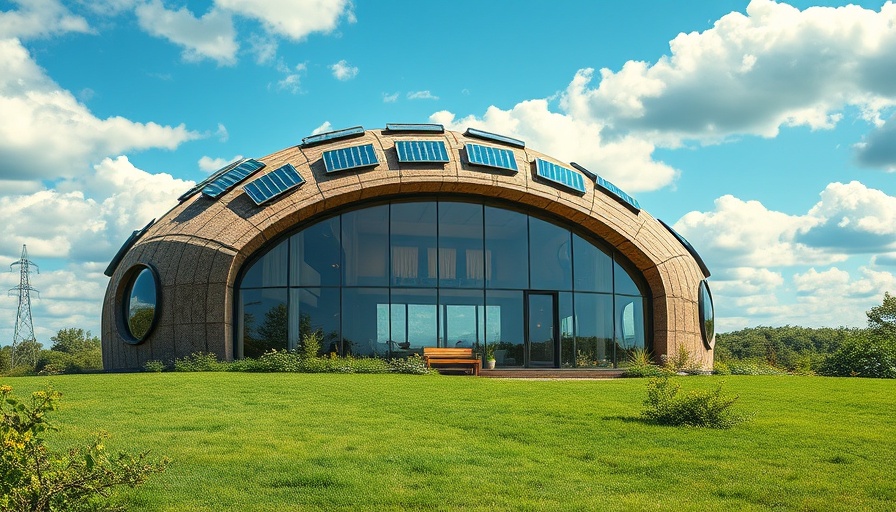
The Innovative World of Earthships
If you’ve ever wondered whether modern homes ask too much from the grid — too much electricity, too much water, too much constant input — you’re not alone. In a state shaped by drought cycles, wildfire seasons, and rising utility costs, many Californians are rethinking what resilience really looks like.
That question has led some people to explore a bold architectural experiment known as the Earthship.
Built using recycled materials and designed to reduce dependence on centralized utilities, Earthships are often described as self-sufficient. But what does that actually mean — especially in California?
The answer is more nuanced than the headlines suggest.
In 'Why Earthships are Amazing – The Ultimate Self-Sufficient Off-Grid Home!', the discussion dives into the sustainable architecture of Earthships, exploring key insights that sparked deeper analysis on our end.
Designed for Self-Sufficiency — Not Guaranteed Independence
Earthships were pioneered in the 1970s by architect Michael Reynolds in New Mexico. His goal was to create homes that could meet many of their own needs through design rather than mechanical systems.
Earthships are designed to:
Use passive solar heating and cooling
Capture and store rainwater
Reuse greywater
Generate solar electricity
Incorporate indoor food-growing areas
Reduce reliance on conventional construction materials
The critical word is designed.
In practice, the level of independence achieved varies depending on climate, engineering, local codes, and how faithfully the systems are implemented. Many Earthships remain partially grid-connected, use propane backups, or rely on supplemental heating in certain climates.
Self-sufficiency is an objective — not an automatic outcome.
Why Earth-Packed Tires Function as Thermal Mass
One of the defining features of Earthships is their thick exterior walls built from discarded tires tightly packed with earth.
From a building science perspective, these walls function as thermal mass. Thermal mass materials absorb heat when surrounding air temperatures rise and release that heat slowly as temperatures drop. When properly integrated into a passive solar design, this can reduce indoor temperature swings.
This principle is widely accepted in sustainable architecture and is not unique to Earthships. The performance, however, depends heavily on insulation strategy, ventilation design, glazing specifications, and climate conditions.
In a Mediterranean climate like Sacramento’s — hot, dry summers and cool winters — passive solar modeling must be done carefully to avoid summer overheating.

Passive Solar Design: Proven Concept, Climate-Specific Results
Most Earthships are oriented with large south-facing windows to capture winter sunlight. Roof overhangs are sized to block high summer sun while allowing lower winter light to enter.
This is a recognized passive solar strategy supported by the U.S. Department of Energy and other building science authorities. When properly engineered, passive solar design can reduce heating loads significantly.
However, performance depends on:
Exact building orientation
Local latitude
Window specifications
Insulation levels
Air sealing
Ventilation strategy
Improper implementation can result in overheating, heat loss, or condensation issues. In California’s seismic zones, structural engineering must also ensure that passive solar glazing does not compromise lateral load resistance.
Water Harvesting in California: Legal, but Highly Regulated
Earthships are known for capturing rainwater from the roof, storing it in cisterns, and filtering it for household use. Greywater is often reused in interior botanical cells before eventual disposal or septic treatment.
In California:
Rainwater harvesting is legal.
Potable (drinkable) water systems must meet state and local health standards.
Greywater reuse is regulated under the California Plumbing Code (Chapter 16A).
Complex indoor reuse systems typically require permits and engineering approval.
Local building departments may require:
Approved filtration systems
Backflow prevention devices
Cross-connection testing
Engineered septic or wastewater treatment design
Counties vary in how they interpret and enforce these requirements.
For Sacramento residents, any Earthship-style water system would require early coordination with local planning and environmental health departments before design commitments are made.

Energy Independence: Technically Possible, Practically Variable
Earthships typically incorporate photovoltaic solar panels with battery storage. Some models include small wind turbines, though wind systems are less common in urban or suburban California due to zoning and site limitations.
In California, solar installations must comply with:
Title 24 Building Energy Efficiency Standards
Electrical code requirements
Utility interconnection rules (if grid-tied)
Off-grid systems are legal but must still meet electrical safety codes.
Battery storage adds cost and maintenance considerations. Backup generators are sometimes incorporated for reliability.
Energy independence is achievable in some cases, but requires accurate load calculations, realistic consumption habits, and professionally installed systems.
Indoor Food Growing: Beneficial but Climate-Dependent
Many Earthships feature interior greenhouse corridors that use filtered greywater to irrigate plants.
Indoor food production can:
Improve humidity balance
Provide supplemental produce
Contribute to air quality
However, greenhouse performance depends on:
Solar gain management
Ventilation control
Pest management
Temperature regulation
In very hot climates, greenhouse overheating can become a design challenge. These systems must be carefully engineered for Sacramento’s summer heat.

The Cost Reality: Materials vs. Systems
While recycled materials like tires and bottles may be inexpensive or free, overall Earthship construction costs are influenced by:
Land acquisition
Engineering and design services
Structural and seismic compliance
Labor (often extensive)
Permitting and inspections
Solar and battery systems
Water treatment components
Construction timelines can extend months or years, especially for owner-builders.
Financing can be complex, as nontraditional construction methods may not fit conventional appraisal models. Insurance underwriting may also require additional documentation.
The structure may be unconventional, but regulatory and financial systems remain conventional.
Seismic and Structural Considerations in California
California building codes require compliance with seismic safety standards.
Earth-packed tire walls must be engineered to meet:
Lateral load requirements
Shear resistance
Foundation standards
Reinforcement detailing
Unreinforced earth structures typically do not meet California seismic codes without structural engineering modifications.
Any Earthship-inspired design in Sacramento would require licensed engineering review and stamped structural plans.
Permitting: The Most Critical Step
California’s building code framework includes:
California Building Code
California Residential Code
California Plumbing Code
California Electrical Code
Local zoning ordinances
Unconventional construction methods are not prohibited — but they must demonstrate compliance.
Because interpretations vary by jurisdiction, anyone considering Earthship-style construction in Sacramento County should consult local planning and building departments before investing in detailed design work.
Early feasibility discussions can prevent costly redesigns later.

Why Earthships Still Matter
Even with regulatory complexity, Earthships remain influential.
Their principles — passive solar orientation, water reuse, thermal mass, waste reduction, decentralized energy — are increasingly incorporated into mainstream green building practices.
They challenge a core assumption: that homes must rely entirely on centralized infrastructure.
In a state navigating climate resilience, those ideas have value — even if the final structure looks different from the original New Mexico models.
The Bottom Line
Earthships are designed to be self-sufficient. Whether they achieve that goal depends on engineering precision, climate compatibility, regulatory compliance, and realistic expectations.
In California, they are neither impossible nor simple.
For Sacramento residents, the deeper lesson may not be about packing tires with earth — it may be about understanding how design choices shape long-term resilience.
And that conversation is worth having.
Important Note
Because building codes, environmental health regulations, and permitting requirements vary by jurisdiction and change over time, anyone considering Earthship-style construction in California should verify current requirements with their local planning, building, and environmental health departments before proceeding.
Ready to explore sustainable living practices that fit everyday life? Visit Eco Living, then discover additional wellness and lifestyle content on Sacramento Living Well.
---
Published by the Sacramento Living Well Editorial Team — a DSA Digital Media publication celebrating sustainability, balance, and local living.


Write A Comment